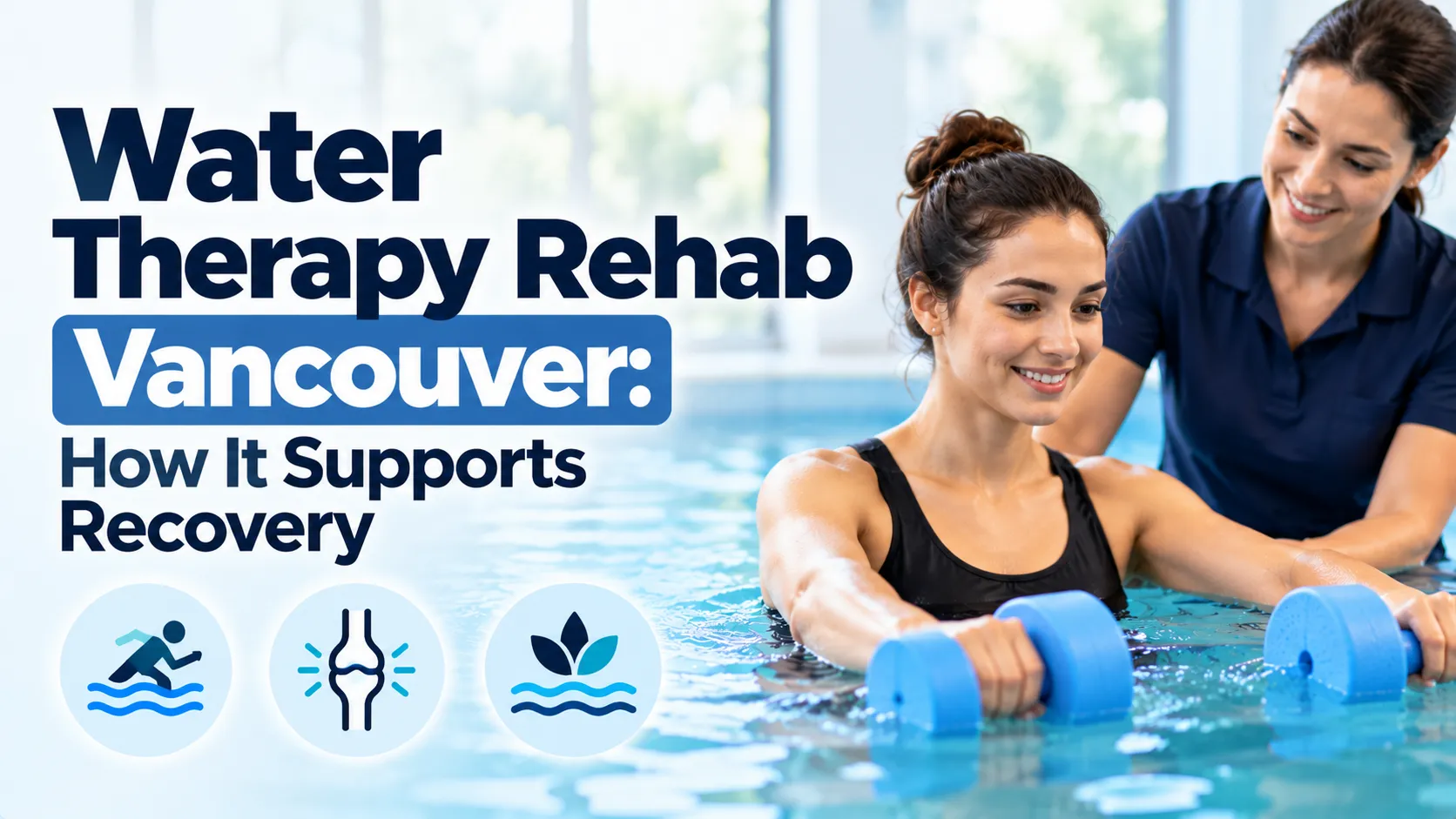
Recovering from an injury can make everyday movement challenging. Walking, bending, climbing stairs, or returning to exercise may feel difficult when pain or stiffness limits your mobility. For some people, water therapy rehab in Vancouver offers a gentler way to work on movement and physical function.
Water-based rehabilitation uses the natural properties of water to support guided exercise. Buoyancy can reduce the amount of body weight placed on joints, while water resistance provides a way to work on strength and control.
SNS Fitness & Rehab offers hydrotherapy services for people seeking personalised support with rehabilitation and movement goals.
What Is Water Therapy Rehabilitation?
Water therapy rehabilitation, also known as aquatic therapy or hydrotherapy, involves performing structured exercises in water as part of a recovery plan.
Unlike recreational swimming, rehabilitation exercises are selected according to your symptoms, abilities, and goals. The programme may focus on improving mobility, building strength, practising balance, or gradually returning to everyday activities.
Water can help in several ways:
- Buoyancy: Supports part of your body weight during movement.
- Natural resistance: Helps challenge muscles through controlled exercises.
- Supported movement: May make certain exercises easier to perform.
- Low-impact activity: Offers an alternative to some weight-bearing exercises.
Water therapy is not suitable for every injury or medical condition, so an individual assessment is important.
Who May Benefit From Water Therapy Rehab?
Water-based rehabilitation may be considered when pain, stiffness, or limited mobility makes land-based exercise difficult.
Injury Recovery
People recovering from certain muscle, joint, or soft-tissue injuries may benefit from controlled movement in water. Exercises can be adjusted to match their tolerance and rehabilitation goals.
Joint Pain and Stiffness
For people with knee, hip, or other joint problems, water-supported exercise may make movement more manageable. A programme can focus on mobility, balance, and gradually improving strength.
Back Pain and Reduced Mobility
When bending, walking, or changing positions is uncomfortable, water-based exercises may provide a supportive starting point. A rehabilitation professional can help select movements suited to your condition.
Post-Surgical Rehabilitation
Water therapy may form part of recovery after some procedures. However, you should only enter a pool when your surgeon or healthcare provider confirms it is safe, particularly if you have an unhealed wound or other restrictions.
What Happens During a Water Therapy Session?
Your session should reflect your current abilities rather than follow a generic exercise routine.
A typical rehabilitation session may include:
- Initial assessment: Discuss your symptoms, medical history, and goals.
- Mobility exercises: Practise controlled movements to work on flexibility and range of motion.
- Strengthening activities: Use water resistance to challenge muscles at an appropriate level.
- Balance and coordination: Work on stability and controlled movement.
- Progress reviews: Adjust exercises as your tolerance and abilities change.
The aim is gradual progress. Exercises should not force you to push through significant pain, and your programme may need adjustment if symptoms worsen.
Water Therapy Rehab in Vancouver With SNS Fitness & Rehab
SNS Fitness & Rehab offers hydrotherapy for clients across Metro Vancouver, including Vancouver, Richmond, and Burnaby. The clinic describes its service as mobile hydrotherapy, with sessions arranged at a suitable aquatic centre.
Its service may be worth exploring if you want guided, water-based rehabilitation tailored to your needs.
Before booking, ask about:
- Whether hydrotherapy is suitable for your condition
- Available aquatic centres and accessibility
- Session duration and current fees
- Insurance coverage or rehabilitation funding
- Any medical clearance required before starting
Visit the SNS Fitness & Rehab hydrotherapy page to learn more about the service.
Is Water Therapy Better Than Land-Based Rehab?
Neither approach is best for everyone. Water-based exercise may make some movements more comfortable, while land-based rehabilitation helps practise strength and functional tasks in everyday environments.
Depending on your condition and goals, combining both approaches may be appropriate. Your rehabilitation professional can help determine the right plan for you.
Final Thoughts
Water therapy rehab in Vancouver may be a useful option for people who need a supported, low-impact way to work on mobility and physical function. The most appropriate programme depends on your injury, medical history, and response to exercise.
SNS Fitness & Rehab offers personalised hydrotherapy services across Metro Vancouver. Contact the clinic to discuss your goals and find out whether water-based rehabilitation may suit your needs.
Frequently Asked Questions
What is water therapy rehab used for?
Water therapy rehab uses guided exercises in water to support mobility, strength, balance, and functional movement. Its suitability depends on the person’s condition and recovery goals.
Can water therapy help with joint pain?
Water-supported movement may make some exercises more comfortable for people with joint pain. It should be tailored to the individual’s condition and physical abilities.
Can I use water therapy after a car accident?
It may be appropriate for some people recovering from accident-related injuries. Speak with your healthcare provider to determine whether it fits your rehabilitation plan.
How long is a hydrotherapy session at SNS Fitness & Rehab?
SNS Fitness & Rehab lists its hydrotherapy sessions as 60 minutes. Contact the clinic to confirm current pricing, availability, and location arrangements.
Does insurance cover water therapy rehab in Vancouver?
Coverage depends on your policy, injury, and the provider’s service classification. Confirm eligibility with your insurer and the clinic before booking.
Do I need medical clearance before starting?
Medical clearance may be necessary after surgery or for certain health conditions. If you are unsure whether water-based exercise is safe for you, consult a healthcare professional first.